
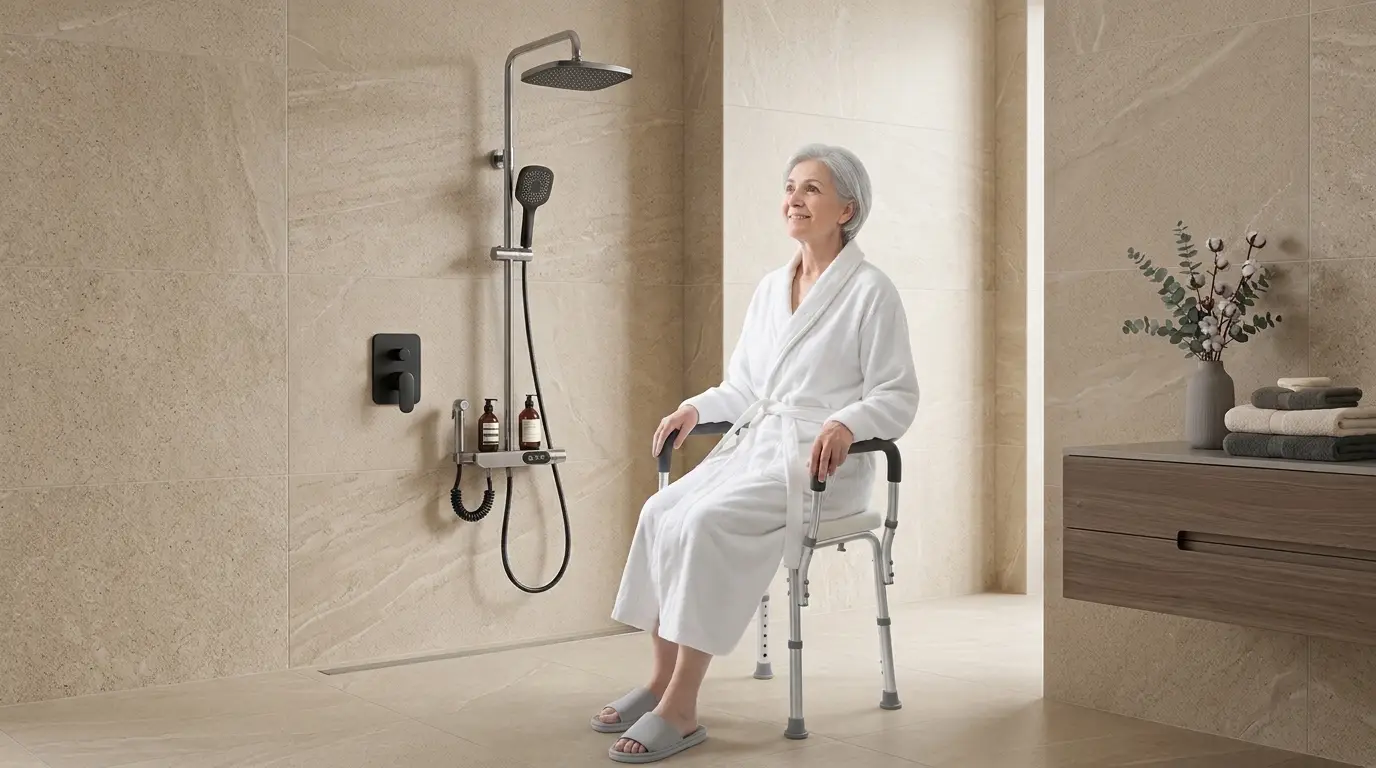
If you have noticed your parent moving more cautiously in the bathroom, you may be unsure whether to raise the subject or offer help. It is a common concern: supporting a parent’s wellbeing while respecting their independence can feel delicate. Bathrooms deserve particular attention because wet surfaces can become slippery, spaces are often tight, and stepping over a tub edge requires balance and strength. Changes in shower safety for seniors are worth noticing early, when families may be able to make practical adjustments before a serious fall occurs. Paying attention does not mean assuming your parent can no longer manage independently; it can simply open a conversation about what would make bathing more comfortable and secure.
Physical signs to notice
Look for changes during or immediately after showering, including:
• Unsteadiness while standing, turning, or moving in the shower.
• Gripping walls, fixtures, or towel bars to keep balance.
• Difficulty lifting a leg to step over the tub edge.
• Leg weakness, or needing to pause before or after bathing.
• Fatigue, lightheadedness, or dizziness while showering.
Even occasional difficulty can matter, especially if it is new or becoming more frequent. A parent may not mention these experiences, so calm, nonjudgmental observations can help identify whether the routine feels manageable.
Behavioral signs to notice
Changes in bathing habits can also signal that the current setup is becoming challenging. Notice if your parent avoids showers, bathes less often, or rushes through a shower. They may express fear of falling, seem anxious about getting in or out, or need reminders to bathe when this was not previously necessary. These patterns are useful clues, not proof that your parent is unwilling or careless.
Physical and behavioral changes may reflect discomfort, reduced balance, fatigue, or concern about slipping—not a lack of interest in personal care. Ask open questions about which parts of bathing feel difficult, and listen before suggesting solutions. A handheld showerhead, grab bars installed securely, or a different bathing arrangement may address specific obstacles. Early discussion gives your parent a role in choosing adjustments and can preserve privacy and independence while reducing avoidable risks.
A standing shower may become difficult to manage when a parent’s health changes or the bathroom presents hazards. Often, risk comes from several factors combining rather than one issue alone. A person who feels unsteady, for example, may be at greater risk on a slick floor or while stepping over a high tub wall. Paying attention to changes can help families decide when to discuss safer bathing arrangements.
Health-related warning signs include a recent fall or near-fall, dizziness after starting a medication or changing its dose, arthritis or other painful movement, and low blood pressure. Vision problems may make it harder to judge distances, locate controls, or notice water on the floor. Memory changes can also affect safe routines, such as remembering to use a prescribed mobility aid or checking that the floor is dry. Ask when symptoms occur—for example, when standing, after taking medication, or during bathing—and share relevant concerns with a doctor. Do not stop or change medication without medical guidance.
The bathroom itself can add risk. A slippery tub or shower floor, dim lighting, a high tub wall, or the absence of a stable seat may make bathing less secure. Grab bars can help when they are installed in appropriate locations and positioned within easy reach; poorly placed bars may not provide useful support. Towel bars are not designed to hold body weight and should not be used as substitutes for grab bars.
Shower safety for seniors often means addressing both changing abilities and the space itself. Consider practical bathroom fall-prevention tips and guidance on choosing grab bars and non-slip surfaces. These steps can support a conversation with a clinician or qualified home-safety professional about whether standing showers remain appropriate and what adjustments may help.
Making a shower safer does not always require a major renovation. Begin by looking at the existing setup and identifying the specific moments that feel unsteady, such as stepping over a tub edge, turning, or reaching for soap. Securely installed grab bars can provide support during standing and transfers, but they should be placed where the parent can actually reach them and fastened into suitable structural backing. Towel bars are not substitutes for grab bars.
A non-slip mat or professionally applied surface treatment may improve traction. Check that any mat lies flat and is designed for the shower; a loose or curled mat can cause a fall. A shower chair or bench can reduce the time spent standing, while a handheld shower head can make it easier to wash while seated. Brighter, well-positioned lighting may also help the parent see changes in floor level and locate controls. Choose stable products that fit the space and match the parent’s balance, strength, and mobility. Bathroom safety products and mobility aids can help preserve independence when selected and installed thoughtfully.
If these adjustments do not make bathing manageable, consider broader options. A transfer bench may help someone move over a tub wall while seated. A tub cut-out or walk-in shower can reduce the step required to enter, although each has costs, installation needs, and limitations. Help from a home health aide may be appropriate if the parent needs assistance with transfers or personal care. A doctor or occupational therapist can assess balance, movement, equipment, and the bathroom layout, then recommend suitable changes. Families may also find it useful to prepare questions to ask an occupational therapist before an appointment.
Discussing changes can be sensitive. Choose a calm moment rather than raising the subject during a rushed or stressful bath. Describe specific observations—for example, that the parent held the towel bar while stepping out—without criticizing or assuming what they can do. Ask what feels difficult, listen to their priorities, and offer to explore options together. Framing adjustments as ways to maintain comfort, privacy, and independence can make the conversation more collaborative. Revisit the plan after changes are made, since needs and confidence may shift over time.
Quick warning signs checklist
Consider whether your parent:
• Grabs taps, towel rails, or other fixtures to keep their balance.
• Struggles to step over the tub edge or get in and out of the shower.
• Experiences dizziness, weakness, or unsteadiness while bathing.
• Avoids showering or rushes through it because it feels difficult or frightening.
• Has recently fallen or nearly fallen in the bathroom.
• Uses a bathroom that is cluttered, slippery, poorly lit, or lacks suitable supports.
Frequently asked questions
Is it safe for seniors to shower alone? It depends on the person’s balance, health, ability to enter and exit safely, and bathroom setup. There is no one-size-fits-all answer. If there are concerns, discuss bathing routines and appropriate support with your parent and, when needed, a health professional.
What is the first change to make if a parent feels unsteady? Start by assessing the bathroom together: notice slippery surfaces, awkward steps, and places where balance is difficult. Discuss suitable supports, such as professionally installed grab bars and a stable shower seat. Seek individualized guidance if you are unsure what will fit the person or space.
When should we ask for professional help? Contact a doctor or occupational therapist after a fall, with recurring dizziness, when showering becomes increasingly difficult, or whenever you are uncertain about equipment or transfers. Prompt advice can help identify causes and practical options.
A gentle next step
Early changes can reduce bathroom risks while respecting a parent’s preferences and independence. Improving shower safety for seniors may involve a small adjustment, a professional assessment, or a different bathing routine; the right choice depends on individual needs. Treat warning signs as a reason to talk, not as proof that someone must immediately give up privacy or control. Begin with a calm, open conversation about what feels difficult and what might make bathing more comfortable. Then explore one manageable change together, at a pace your parent can accept.
A safe home is built one small change at a time. From the front door to the bedroom, our room-by-room checklist helps you spot hazards before they cause problems, so your parents can keep living comfortably and confidently in the place they love.
[Read the Home Safety Checklist →]
If the bathroom is on your checklist, a sturdy shower chair is one of the easiest upgrades. It lets Mom or Dad sit while they bathe, which reduces fatigue and the risk of slipping, and it keeps their independence and dignity intact.