
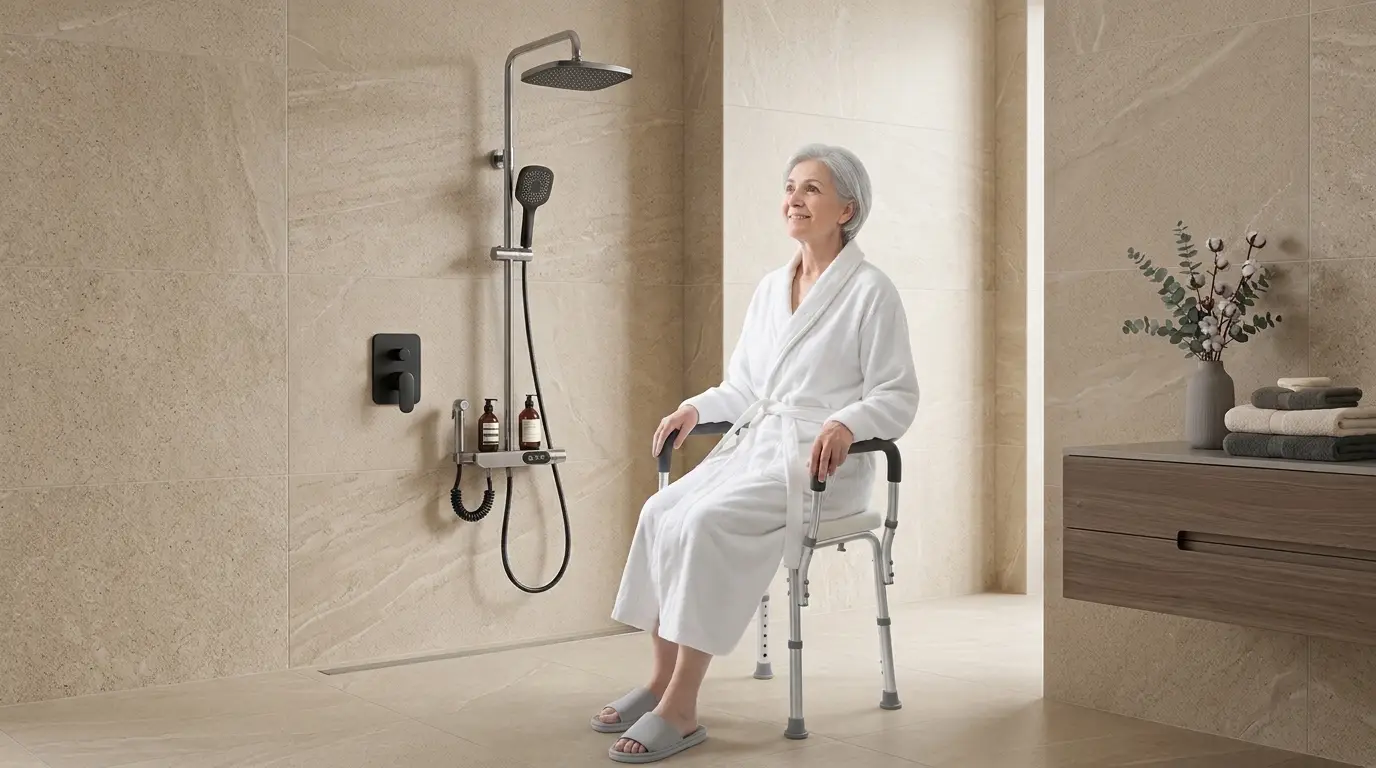
Wanting to protect a parent while respecting their independence can create a difficult balance. You may notice a challenge in the bathroom and feel an urge to act quickly, yet worry that raising it will sound like criticism or suggest that your parent can no longer manage everyday tasks. The conversation can feel especially personal because it concerns a private part of daily life. Pride, privacy, embarrassment, and worries about getting older may all shape how your parent hears your words. Even a practical suggestion can be interpreted as a judgment about their abilities if the subject is approached too abruptly.
There are practical reasons to consider safety in the bathroom, but they do not need to be presented in alarming terms. Wet floors and surfaces can be slippery, while compact layouts may leave little room to regain balance or move comfortably. Getting into and out of a tub or shower also involves a change in position that can be challenging for many people. These everyday conditions can increase the chance of a fall, even for someone who is generally active and independent. If you want to talk to elderly parent about bathroom safety, focusing on the environment rather than on perceived shortcomings can help keep the discussion respectful.
It may help to frame the conversation as a shared effort to make familiar routines more comfortable and secure. The goal is not to take control or insist that your parent change everything; it is to explore whether small adjustments could make bathing easier and help them feel confident at home. Ask what feels comfortable, listen before proposing solutions, and leave room for your parent to express concerns or preferences. A collaborative approach can preserve dignity while making practical improvements possible. Before deciding what to suggest, consider how your parent may view the issue, what independence means to them, and which concerns they may find hardest to discuss.
A parent may hear suggestions about bathroom changes as criticism, a loss of control, or evidence that they are becoming a burden. Even a practical idea can feel personal when it touches privacy and independence. The goal is not to persuade them that they cannot cope; it is to understand what would help them feel comfortable and secure. To talk to elderly parent about bathroom safety, choose a calm, private, unhurried moment. Avoid raising it immediately after a fall, when emotions may be high, and never discuss it in front of other people.
Begin with empathy and curiosity rather than instructions. Ask open questions, listen without interrupting, and give your parent time to respond. You might say:
• “Does the shower feel comfortable to use these days?”
• “Have you noticed any spots in the bathroom that feel slippery?”
• “Is there anything in here that would make bathing easier for you?”
Use “I” and “we” language to share your feelings and frame changes as a joint decision. Focus on shared problem-solving, not on what your parent can no longer do. For example, say, “I’d feel better if we looked at a few options together,” rather than, “You can’t manage this safely anymore.” The first invites discussion; the second can sound accusatory and controlling. Other supportive alternatives include:
• Say: “Could we explore a handrail that suits the way you use the shower?”
• Not: “You need a grab bar because you’re unsteady.”
• Say: “What changes, if any, would make you feel more at ease?”
• Not: “I’m fixing this whether you like it or not.”
Offer choices instead of presenting a single solution, and ask for your parent’s opinion about each possibility. They may prefer a different style of rail, a nonslip surface, or no change right now. Invite them to help compare products, set a budget, and decide when any work should happen. Respectful collaboration preserves a sense of control and makes it more likely that changes will feel useful, acceptable, and genuinely supportive.
A first step does not need to feel like a major change or a judgment about your parent’s abilities. Present bathroom updates as comfort or convenience improvements that make daily routines easier for anyone. For example, a night light can help with visibility, while a non-slip mat can make stepping out of the shower feel more secure. Keep the focus on practical benefits rather than on what might go wrong.
Offer a few reasonable options and invite your parent to choose what seems useful. Possibilities include professionally installed grab bars, a shower chair for resting while bathing, or a raised toilet seat that makes sitting and standing more comfortable. Avoid presenting every product at once; beginning with one manageable change can make the idea easier to consider. Ask which part of the bathroom, if any, they would most like to improve.
Products and mobility aids vary in suitability, and an item that works well for one person may not fit another person’s needs or bathroom layout. A doctor or occupational therapist can offer personalized guidance about balance, movement, and the space available. You might review a [bathroom safety checklist] together or consult a [guide to choosing mobility aids] before deciding. When you talk to elderly parent about bathroom safety, listening and offering choices can help preserve their sense of control.
If your parent says no, listen to their concerns without arguing or insisting that they accept a change immediately. Acknowledge their response and leave the subject open to revisit later, especially if their needs or preferences change. You could say that you are happy to discuss it again whenever they are ready. If the conversation feels difficult between you, ask whether a trusted doctor, occupational therapist, or family friend might raise the topic in a way that feels more comfortable. The goal is to support your parent’s choices while keeping practical options available.
An initial refusal does not always mean the conversation has failed. Your parent may feel embarrassed, worry about losing independence, or simply need time to consider the idea. Acknowledge their response without arguing, then ask whether you can revisit the subject another day. A calm, private conversation can feel more respectful than raising concerns in front of others or during a stressful moment.
Pay attention, however, if circumstances have changed. A recent fall, repeated near-falls, dizziness, or new confusion calls for a timely discussion with a healthcare professional. These changes may affect bathroom safety and could warrant prompt assessment. You may need to take a more active role in arranging support, while explaining your concerns and involving your parent in decisions as much as possible. The purpose is to make daily routines safer—not to punish them or take control unnecessarily.
When you talk to elderly parent about bathroom safety, begin by listening, choose a private moment, offer choices, and start with manageable changes. Ask what would make the bathroom feel more comfortable, and let your parent help decide what to try first. One small adjustment can be a useful starting point. Consider sharing [how to prepare for an occupational therapy home assessment] if professional guidance may help.
Frequently Asked Questions
What if my parent refuses help?
Respect the answer for now, ask what concerns them, and leave the door open to another conversation. If there have been falls or other concerning changes, seek timely professional advice.
How can I bring up bathroom safety without offending them?
Speak privately, use a warm and matter-of-fact tone, and focus on comfort and independence. Ask permission to share an observation rather than issuing instructions.
When should I involve a doctor or occupational therapist?
Contact a healthcare professional after a recent fall, ongoing dizziness, or new confusion. An occupational therapist can assess the home and suggest practical adaptations.
Choose one small step today, or invite your parent to tell you what would make the bathroom feel more comfortable. Listening and working together can help preserve dignity while making support easier to accept.
Sometimes the signs are small: a hand gripping the wall, a shorter shower, or a new hesitation before stepping in. Knowing what to look for can help you act early, before a fall happens. In this guide, we walk through the warning signs and the gentle steps you can take to keep your parent safe and confident at bathing time.
If your parent tires easily or feels unsteady on their feet, a sturdy shower chair lets them sit while they bathe. It reduces the risk of slips and dizziness, and it helps them keep their routine and independence.